



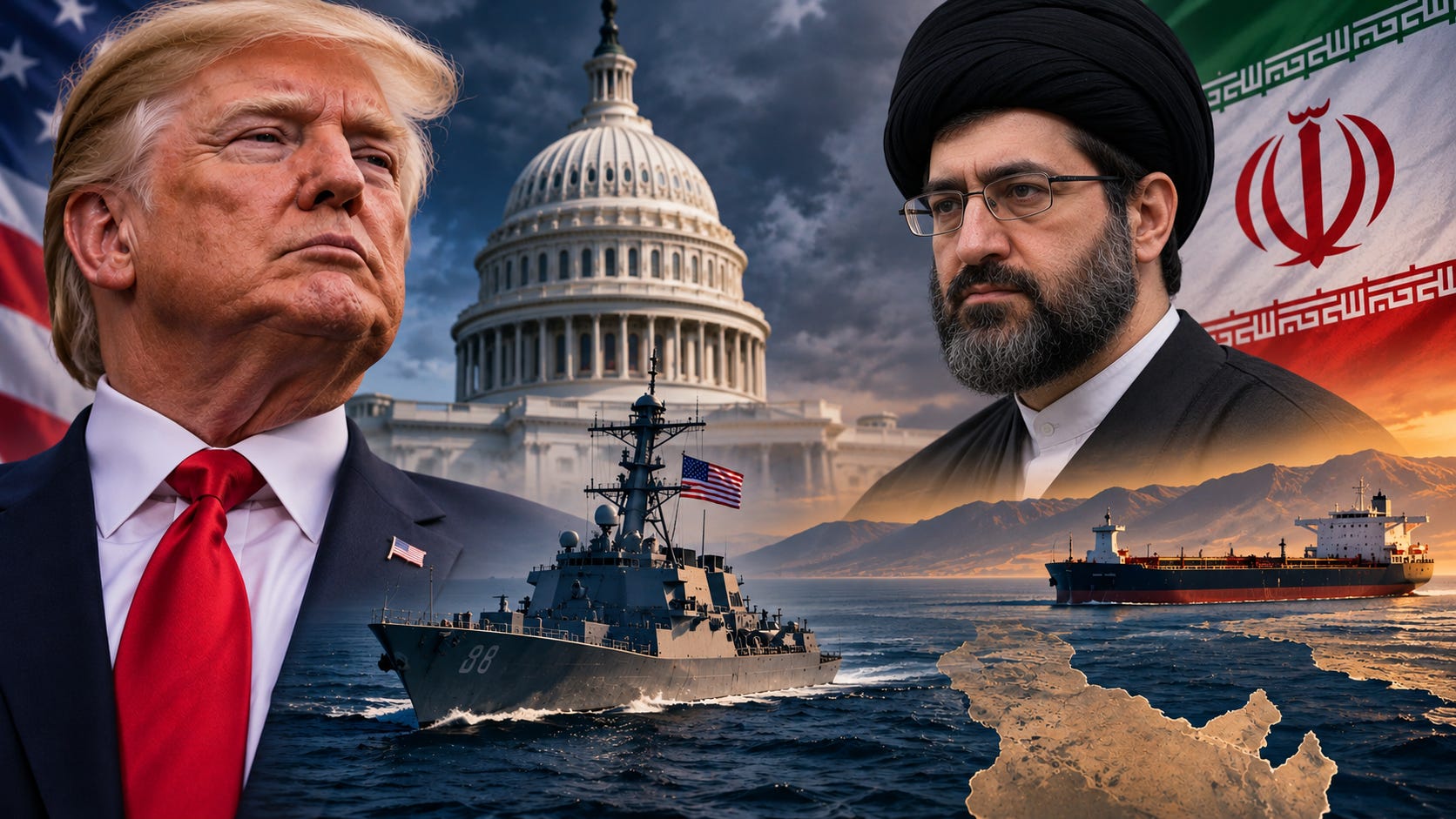
The U.S. midterm elections have changed the political conditions surrounding the Iran war without ending it. Democratic control of Congress strengthens its ability to investigate the war, restrict funding, and force a diplomatic reckoning. Still, President Donald Trump retains commander-in-chief authority and can veto legislation aimed at halting the conflict.
The midterms raise the political cost of war without guaranteeing its end. Congress can constrain escalation through appropriations, oversight and legislation attached to must-pass bills. A durable settlement still depends on resolving sanctions, frozen assets, the U.S. naval blockade, and the Strait of Hormuz.
For European and Gulf allies, the outcome cuts both ways. A more constrained United States may reduce the risk of a full-scale escalation. It also weakens confidence in American security commitments, arms cooperation, and diplomatic strategy.
The midterm mandate
That political shift was not accidental. The midterms turned the war’s economic and political cost into an electoral liability. Voters concerned about fuel prices, economic pressure, and a prolonged foreign entanglement handed Democrats control of both the House and Senate, making the Iran conflict a central domestic issue. Trump will hold off on new strikes for now, while retaining the naval blockade and leaving open the possibility of future action.
Democrats take control in January 2027, but they can use the lame-duck session and the December 11 government-funding deadline to press for limits on war funding. Oil prices fell sharply after the election as investors priced in a lower risk of renewed escalation.
Congress versus the commander in chief
The electoral mandate gives Congress leverage but not unlimited power. The U.S. system divides war-making authority between the president and Congress. The president commands the armed forces, while Congress controls appropriations, legislation, oversight, and confirmation.
Congress cannot end the war unilaterally. A binding measure must pass both chambers and either win presidential approval or obtain a two-thirds vote in each chamber to override a veto.
The power of the purse
Congress’s strongest lever is its constitutional control over federal spending. Both chambers must approve every new dollar the Department of War seeks.
Democrats are pressing to attach restrictions on Iran war funding to the December spending bill. The White House requested $87.6 billion in supplemental funding, including $67 billion for the Pentagon, but it has stalled because of Democratic opposition and demands for war guardrails.
A more likely approach is a narrower restriction. Congress could prohibit funding for a specific category of operations, require advance notification for escalation, cap deployment levels, or condition supplemental war funding on a diplomatic strategy.
Oversight as a weapon
Congress can use oversight to make escalation politically and legally costlier. Investigating the war through hearings, document requests, subpoenas, and public testimony on the legal basis for operations, civilian casualties, targeting decisions, intelligence assessments, contractor involvement, and the war’s financial cost. Democrats can scrutinise defence, intelligence, and diplomatic nominees to extract commitments on war policy and congressional consultation.
Impact on the war’s trajectory
Through the midterm results, three plausible trajectories have emerged.
Constrained continuation. The war may continue at lower intensity, with tighter funding conditions and more oversight, keeping markets unstable and allies uncertain.
Negotiated de-escalation. Congressional pressure and economic costs could push the administration toward a settlement or ceasefire framework, as Qatar mediates an interim Hormuz arrangement.
Escalation before exit. The administration could launch a limited strike to create a political off-ramp if negotiations stall.
The Strait of Hormuz and Allied Exposure.
The Strait of Hormuz is where military escalation becomes an immediate global economic shock, with continued shipping attacks sustaining supply concerns.
Under Iran’s proposal, Tehran would end its blockade of the Strait of Hormuz in return for an end to the U.S. blockade of Iranian ports, a halt to bombing and the release of some frozen assets; nuclear talks and broader sanctions relief would follow. The proposal remains unconfirmed, and Washington has rejected its central terms. Tehran’s offer to reopenHormuz within two days depends on a broader end to the conflicts, exposing the gap between Washington’s search for limited de-escalation and Iran’s demand for a comprehensive settlement. The proposal highlights that Iran views the current hostilities as a single, interconnected regional theatre. Washington, however, is attempting to decouple the immediate shipping crisis from the deeply complex, long-term nuclear and sanctions negotiations.
For Europe, the danger is not only escalation but policy volatility: a Washington that shifts between coercion, negotiation and disengagement. A divided Washington complicates joint planning, intelligence coordination, sanctions policy, and crisis management. Congressional scrutiny of arms sales and military assistance could also affect European procurement.
Energy exposure is equally important. Renewed strikes or disruption around the Strait of Hormuz would raise oil and shipping costs, worsening European inflation and industrial competitiveness. A more sceptical Congress may put more pressure on European allies to shoulder a greater share of regional defence and deterrence.
Gulf states face a narrower margin between deterrence and escalation. They want the war to end, but not at any cost. Congressional constraints reduce the likelihood of a full-scale U.S. assault and increase the incentive to seek a deal. Yet Gulf partners worry that such constraints could weaken U.S. air defence, naval presence, intelligence sharing, or rapid reinforcement, exposing them to Iranian coercion. Greater scrutiny could slow arms deliveries and complicate procurement.
Gulf states depend on stable shipping lanes and secure energy infrastructure. The attack on Saudi Arabia’s East-West Pipeline shows how exposed they remain. If the United States accepts terms that leave Iran’s nuclear program untouched and preserve its regional influence, Gulf states may see the deal as a concession that leaves the underlying threats unresolved.
From Constraint to Settlement
These pressures define the limits of congressional leverage. Congress can change the incentives around the war by restricting funding, demanding oversight, and conditioning future support on a diplomatic strategy, but it cannot itself deliver a settlement. Democrats can make escalation politically and fiscally costlier, but they cannot compel a settlement without a veto-proof majority or a willingness to risk a broader funding crisis.
For European and Gulf allies, the result cuts both ways. A more constrained United States reduces the risk of full-scale escalation but weakens confidence in American security commitments and diplomatic strategy. The decisive question is whether Congress can-convert leverage into a durable diplomatic framework that restrains escalation without undermining deterrence.
The Strategic Desk | Beyond the Headlines
The future of the Iran war will not be determined by military power alone. Congressional authority, diplomatic negotiations, energy security and the reliability of American alliances will all shape what happens next.
At The Strategic Desk, we examine the geopolitical developments shaping international affairs, connecting today’s events with their wider strategic consequences.
Follow The Strategic Desk for independent geopolitical analysis, strategic insights and in-depth international coverage.
Subscribe to stay informed and understand not just what is happening, but why it matters.
Congress has good tools to stop the war, and funding is one of them, but it remains to be seen whether it has the will. If its will is not serious, they could strike a deal with Trump over Ukraine. Trump would be forced to provide and send the Ukraine aid that Democrats want, in exchange for them approving funding for the military war with Iran. It remains to be seen how much pressure they come under from anti-war groups.